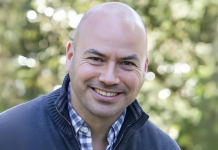


Long before Doug Ricket became the CEO and Co-Founder of PayJoy—a global fintech with more than $300 million in annualized revenue—he was living in West Africa, learning firsthand what it meant to build trust in underserved communities. As a Peace Corps volunteer in rural Gambia, he taught math without electricity or running water, forming close bonds with families who shaped his worldview—and sparked his drive to build something that could bridge the gap between technology and access.
It’s no coincidence that PayJoy, the company he launched in 2015, now serves more than 13 million people across Latin America, Africa, and Southeast Asia. Or that the company is profitable and growing, with $3 billion in credit extended and a model that’s been described as nothing short of revolutionary: smartphone-based collateral, real-time credit scoring, and AI-powered lending for people with no credit history. Ricket’s career path—engineer at Google, inventor in solar energy, MIT-trained computer scientist, and Stanford MBA—is impressive. But it’s his Peace Corps experience that set the foundation for a mission-driven business built for the "next billion."
When PayJoy began, its core technology was licensed out to partners. But when the pandemic hit and partners faltered, Ricket made the decision to pivot. He shut down the original business model and took control of the entire lending operation. “All I could say was, I think this thing isn’t working and that thing looks like it’d be better,” he said. That scary move—from middleman to direct lender—catapulted PayJoy from $10 million to $300 million in revenue in just four years.
And like many technical founders, Ricket had to learn to lead, not just build. “There’s that dangerous valley in the middle,” he said. “I come from tech and want it to happen in two days, but I’ve lost sight of the actual details that make it take two weeks.” Delegation, ownership, and trust in his team became the real code he had to crack.
Progress is manual. It’s messy. And it’s built by people who, like Ricket, are willing to “grab the flag”—to name the problem, commit to solving it, and bring others with them.